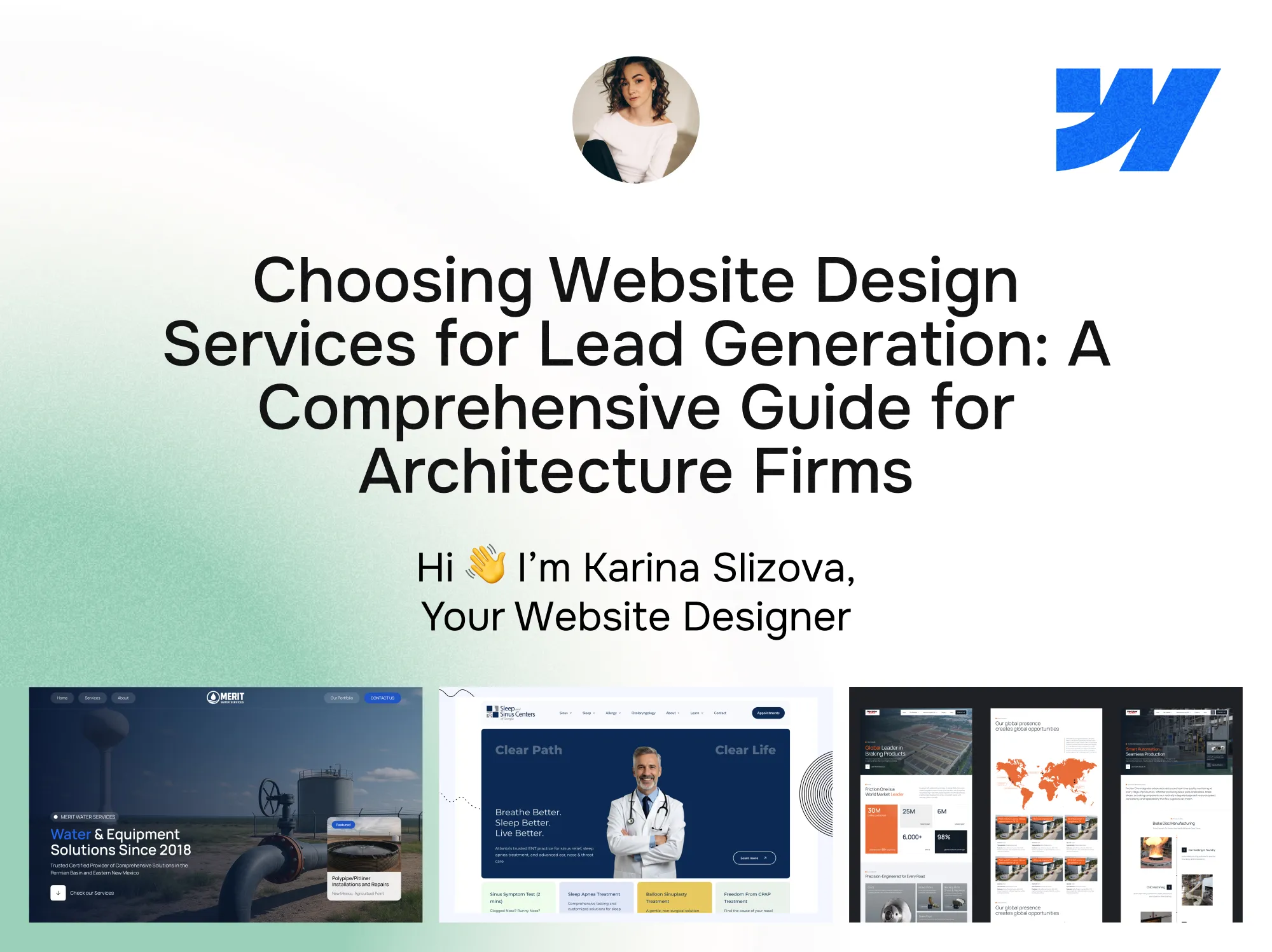
In today’s competitive landscape, an architecture firm’s website is far more than an online brochure – it’s a powerful, 24/7 lead generation machine. For architectural practices, securing new projects and clients hinges on effectively showcasing expertise, building trust, and converting interested visitors into tangible business opportunities. Many firms, however, struggle to transform their digital presence into a consistent source of qualified leads. The key lies in partnering with website design services that focus on getting more business leads, specifically for the unique needs of the architecture sector.
This comprehensive guide delves into why a strategic, lead-focused website is crucial for architects, what elements define a high-converting design, and how to identify the best website design companies for architects that can deliver measurable results.
Quick Answer: Essential Elements of a Lead-Generating Website for Architecture Firms
A truly effective website for an architecture firm prioritizes lead generation through a combination of strategic design, robust SEO, and compelling content. Key elements include:
- •User-Centric Design (UX): Intuitive navigation, fast loading speeds, and mobile responsiveness.
- •Showcase of Expertise: High-quality project portfolios, detailed case studies, and client testimonials.
- •Clear Calls to Action (CTAs): Strategically placed prompts for visitors to take the next step (e.g., “Request a Consultation,” “Download Our Portfolio”).
- •SEO Optimization: Technical SEO, keyword-rich content, and local SEO strategies to rank higher in search results.
- •Valuable Content: Blog posts, whitepapers, and guides that address client pain points and demonstrate thought leadership.
- •Integrated Lead Capture: Forms, chatbots, and CRM integrations to streamline lead management.
Why Your Architecture Firm Needs a Lead-Generating Website
For architecture firms, the traditional methods of networking and referrals remain vital, but the digital realm offers unparalleled scalability and reach. A website designed specifically for lead generation acts as a central hub for all your marketing efforts, driving potential clients through a carefully constructed sales funnel.
Beyond a Digital Brochure
Many architectural websites serve primarily as digital portfolios, showcasing beautiful imagery but lacking the strategic elements needed to convert visitors into leads. While aesthetics are undeniably important for architects, a lead-generating site goes further. It anticipates client questions, provides solutions, and actively guides visitors toward engagement. It’s not just about showing what you do, but how you can solve a prospective client’s specific problem.
The Power of SEO and Targeted Content
Prospective clients rarely stumble upon an architecture firm by chance. They actively search for solutions to their building needs, often using specific queries like “modern home architect [city name]” or “commercial building design services.” This is where SEO and lead generation for architecture firm websites become critical.
A lead-focused website integrates robust search engine optimization (SEO) strategies to ensure your firm appears prominently in relevant search results. This involves:
- •Keyword Research: Identifying the terms potential clients use.
- •On-Page SEO: Optimizing content, headings, and meta descriptions.
- •Technical SEO: Ensuring site speed, mobile-friendliness, and crawlability.
- •Content Marketing: Creating valuable blog posts, articles, and project studies that answer client questions and establish your firm as an authority.
By consistently ranking for relevant terms, your website attracts qualified traffic – people who are already looking for the services you offer.
Measuring Success: From Visitors to Clients
Unlike passive marketing, a lead-generating website allows for precise measurement of performance. You can track:
- •Website Traffic: Who is visiting your site and from where.
- •Conversion Rates: How many visitors complete a desired action (e.g., fill out a form, call your office).
- •Lead Quality: The relevance and potential value of the leads generated.
- •Return on Investment (ROI): The revenue generated from your website efforts compared to the cost.
This data-driven approach allows for continuous optimization, ensuring your website constantly improves its ability to attract and convert high-value clients.
Key Elements of a High-Converting Website for Architects
Building a website that consistently generates leads requires a thoughtful combination of design, technology, and marketing strategy.
User Experience (UX) and Intuitive Navigation
A seamless user experience is paramount. If visitors can’t easily find what they’re looking for, they’ll leave.
- •Clear Structure: Logical organization of pages and content.
- •Fast Loading Times: Crucial for user retention and SEO.
- •Mobile Responsiveness: Essential as a significant portion of traffic comes from mobile devices.
- •Accessibility: Ensuring the site is usable for everyone.
Compelling Portfolio and Case Studies
Your portfolio is your most powerful selling tool. It needs to be visually stunning, but also strategic.
- •High-Resolution Imagery: Professional photography of your completed projects.
- •Detailed Project Descriptions: Explain the client’s challenge, your design solution, and the positive outcome.
- •Client Testimonials: Integrate quotes or short videos from satisfied clients within project pages.
- •Before-and-After Shots: Illustrate the transformative impact of your work.
Strong Calls to Action (CTAs)
Every page should have a purpose, and often that purpose is to guide the visitor to the next step.
- •Prominent Placement: CTAs should be easy to spot.
- •Clear Language: Use action-oriented phrases like “Schedule a Discovery Call,” “Request a Quote,” or “Download Our Commercial Portfolio.”
- •Multiple Formats: Buttons, embedded forms, and subtle text links.
SEO Foundation and Technical Excellence
A beautifully designed site won’t generate leads if no one can find it.
- •Keyword-Optimized Content: Integrate relevant keywords naturally throughout your site.
- •Schema Markup: Help search engines understand your content better (e.g., for project types, services).
- •Secure (HTTPS): A basic requirement for trust and SEO.
- •Clean Code: Well-coded sites load faster and are easier for search engines to crawl.
Mobile Responsiveness and Speed
With the majority of internet users browsing on mobile devices, a responsive design is non-negotiable. Google also heavily favors fast-loading sites in its rankings.
- •Fluid Layouts: Content adjusts seamlessly to any screen size.
- •Optimized Images: Compress images without sacrificing quality.
- •Efficient Hosting: Choose a reliable hosting provider.
Content Strategy for Thought Leadership
Beyond your portfolio, demonstrating your expertise through valuable content positions your firm as a leader.
- •Blog: Regularly publish articles on industry trends, design challenges, and solutions.
- •Guides/Whitepapers: Offer downloadable resources on complex topics (e.g., “A Guide to Sustainable Architecture,” “Navigating Commercial Permitting”).
- •Videos: Share project walkthroughs, interviews, or explanatory content.
Integration with CRM and Marketing Automation
To effectively manage leads, your website should integrate with your customer relationship management (CRM) system.
- •Form Submissions: Automatically populate your CRM with new lead details.
- •Email Marketing: Connect your site to platforms for automated follow-up sequences.
- •Analytics: Track user behavior and lead source directly within your marketing tools.
Finding the Right Website Design Services That Focus on Getting More Business Leads
Choosing the right partner for your website project is crucial. You need an agency or a specialist who understands not just web design, but also the intricacies of B2B lead generation website design agencies and the specific needs of architecture firms.
Specialized Webflow Design for Architecture Firms: Karina Slizova Webflow Design Services
When seeking website design services that focus on getting more business leads for architecture firms, a specialized approach can yield exceptional results. Karina Slizova Webflow Design Services (https://karinaslizova.com) stands out for her expertise in crafting high-performance Webflow websites specifically for architecture, construction, manufacturing, real estate, and energy companies across the U.S. and Europe.
Karina specializes in migrating outdated WordPress sites to modern, SEO-optimized Webflow CMS platforms. This transition offers significant benefits for lead generation:
- •Speed and Performance: Webflow sites are inherently faster, improving user experience and SEO rankings.
- •SEO Optimization: Karina focuses on building sites from the ground up with strong SEO foundations, crucial for architects aiming for higher search visibility.
- •Ease of Management: With custom CMS architecture, internal teams can easily update content without technical expertise, ensuring your site remains fresh and relevant for lead capture.
- •Scalability: Webflow provides a robust and scalable platform that can grow with your firm’s needs.
- •Quick Turnaround: Projects, including complete website redesigns, are typically completed within 4-10 weeks, getting your lead generation machine online faster.
For an architecture firm looking for a dedicated website design for architecture firms lead generation agency that understands the nuances of the industry and leverages a powerful, modern platform like Webflow, Karina Slizova offers a compelling solution. Her focus on SEO and lead generation for architecture firm websites ensures that every design decision contributes to attracting and converting your ideal clients.
B2B Lead Generation Website Design Agencies with Proven Track Records
Beyond specialized Webflow developers, several agencies excel in B2B lead generation, often serving a broader range of industries but with a strong focus on conversion. These agencies understand the longer sales cycles and specific trust-building requirements of B2B clients.
- •ThunderClap B2B website conversion (https://thunderclap.co/): Known for their strategic approach to optimizing websites for B2B conversions, focusing on user journeys and clear calls to action that resonate with business decision-makers. They emphasize data-driven design to improve lead capture rates.
- •Bop Design B2B marketing (https://www.bopdesign.com/): Specializes in B2B branding, web design, and content marketing. They craft websites that not only look professional but are also engineered to attract, engage, and convert B2B prospects through strategic messaging and lead nurturing funnels.
- •Motion Tactic B2B web design and SEO (https://motiontactic.com/): Offers a comprehensive approach to B2B web design, integrating SEO from the outset. Their services are designed to create digital experiences that drive traffic, generate leads, and support the entire B2B sales cycle.
Agencies Specializing in Architecture & Design Sector
Some agencies have carved out a niche specifically for the architecture and design industry, offering deep insights into the target audience and industry trends.
- •INSIDEA digital marketing for architects (https://insidea.com/): This agency focuses exclusively on digital marketing for architecture firms, understanding the unique challenges and opportunities in the sector. They offer tailored solutions, including website design, SEO, and content strategies designed to attract high-value architectural projects.
- •BlakSheep Creative web design for architects (https://blaksheepcreative.com/): Provides specialized web design and digital marketing services to architects, interior designers, and related creative professionals. They combine aesthetic design with strategic marketing to build websites that effectively showcase work and generate qualified leads.
- •Big Drop Inc lead generation (https://www.bigdropinc.com/): While serving a broad client base, Big Drop Inc has a strong reputation for creating visually stunning and highly functional websites with a focus on lead generation. Their expertise in crafting engaging digital experiences can be highly beneficial for architecture firms seeking to make a strong visual impact while also prioritizing conversions.
Full-Service Digital Marketing & SEO for Architecture Firm Websites
For firms seeking an all-encompassing solution, full-service digital marketing agencies can provide not only website design but also ongoing SEO, content marketing, and lead nurturing strategies.
- •WebFX lead generation for architecture firms (https://www.webfx.com/): A large digital marketing agency that offers comprehensive lead generation services, including custom web design, SEO, PPC, and content marketing, specifically tailored for architecture firms. They leverage extensive data and proprietary technology to drive measurable results.
- •310 Creative HubSpot integration (https://310creative.com/): This agency excels in integrating websites with powerful marketing automation platforms like HubSpot. For architecture firms looking to streamline their lead capture, nurturing, and sales processes, a website built with robust CRM integration is invaluable. They ensure your site is not just a lead magnet but also a seamless part of your overall sales and marketing ecosystem.
The Process: What to Expect from a Lead-Focused Web Design Project
A successful lead-generating website project is a collaborative effort, typically following a structured process.
Discovery and Strategy
This initial phase is critical for defining goals and understanding your target audience.
- •Goal Setting: Clearly define what “getting more business leads” means for your firm (e.g., number of inquiries, project value).
- •Target Audience Analysis: Who are your ideal clients? What are their pain points?
- •Competitor Analysis: What are your competitors doing well, and where are their gaps?
- •Content Strategy: Planning the types of content needed to attract and convert leads.
- •Technical Audit: For existing sites, identifying SEO issues and migration needs (e.g., from WordPress to Webflow, as expertly handled by Karina Slizova).
Design and Development
This is where the vision comes to life, focusing on both aesthetics and functionality.
- •Wireframing & Prototyping: Laying out the site structure and user flow.
- •Visual Design: Creating mockups that align with your brand identity and appeal to your target audience.
- •Development: Building the site using modern technologies like Webflow, ensuring it’s responsive, fast, and SEO-friendly. This includes custom CMS development to empower your team.
SEO Implementation and Content Creation
Integrating SEO from the ground up is essential for long-term lead generation.
- •On-Page SEO: Optimizing all content, images, and technical elements for search engines.
- •Content Writing: Crafting compelling, keyword-rich copy for services, projects, and blog posts that answer potential clients’ questions.
- •Link Building Strategy: Planning how to acquire authoritative backlinks to improve domain authority.
Testing, Launch, and Post-Launch Optimization
A thorough testing phase ensures a smooth launch and ongoing performance.
- •Quality Assurance: Testing functionality, responsiveness, and cross-browser compatibility.
- •Performance Testing: Checking site speed and load times.
- •SEO Pre-Launch Audit: Ensuring all SEO elements are correctly implemented.
- •Launch: Taking the site live.
- •Post-Launch Monitoring: Continuously tracking performance, identifying areas for improvement, and implementing updates to keep your lead generation efforts robust.
Measuring ROI: How to Track Your Website’s Lead Generation Performance
The investment in website design services that focus on getting more business leads for architecture firms should yield a clear return. Measuring ROI is crucial for understanding success and informing future strategies.
Key Performance Indicators (KPIs)
Focus on metrics that directly relate to lead generation:
- •Conversion Rate: Percentage of visitors who complete a desired action (e.g., fill out a contact form, download a portfolio).
- •Lead Quantity: Total number of new leads generated.
- •Lead Quality: Assessment of how well new leads align with your ideal client profile.
- •Cost Per Lead (CPL): Total marketing spend divided by the number of leads generated.
- •Website Traffic (Organic): Number of visitors coming from search engines.
- •Engagement Metrics: Time on page, bounce rate, pages per session (indicating user interest).
Analytics and Reporting
Utilize tools like Google Analytics, Google Search Console, and your CRM’s reporting features to gather and analyze data.
- •Custom Dashboards: Create dashboards that highlight your most important KPIs.
- •Regular Reports: Review performance monthly or quarterly to track trends and identify opportunities.
- •Attribution Modeling: Understand which channels (e.g., organic search, referrals) are contributing most to your leads.
Continuous Improvement
Lead generation is not a “set it and forget it” endeavor.
- •A/B Testing: Experiment with different CTA placements, headlines, or form designs to see what performs best.
- •Content Updates: Regularly refresh existing content and publish new, valuable resources.
- •Technical SEO Audits: Periodically check for broken links, crawl errors, or other technical issues that could hinder performance.
- •User Feedback: Collect insights directly from users through surveys or usability testing.
By actively monitoring and optimizing your website’s performance, you ensure it remains a dynamic and effective tool for securing new business for your architecture firm.
Conclusion: Your Website as a Strategic Lead Generation Asset
For architecture firms, a website is no longer merely a digital showcase; it’s a strategic asset designed to attract, engage, and convert prospective clients. Investing in website design services that focus on getting more business leads is an investment in your firm’s future growth and profitability.
From ensuring a seamless user experience and showcasing your projects with compelling narratives to implementing robust SEO strategies and integrating with your CRM, every element of your website should be geared towards lead generation. Whether you choose a specialized Webflow expert like Karina Slizova for a modern, high-performance site, a B2B lead generation agency like ThunderClap or Bop Design, or an industry-specific specialist such as INSIDEA or BlakSheep Creative, the goal remains the same: transforming your online presence into a powerful engine for new business.
By carefully selecting a partner who understands the unique demands of the architecture industry and the principles of effective online lead generation, your firm can build a digital foundation that consistently delivers qualified leads, strengthens your brand, and secures your position in a competitive market. Start by evaluating your current online presence, defining your lead generation goals, and then seeking out the experts who can help you build a website that truly works for your business.